Hello! It is the blog How Unique Japan! We always give you some tips on Japanese features!
So, what comes today?
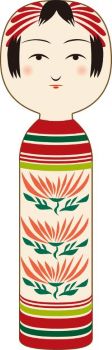
Do you have experience shopping in Japanese souvenir shops? If you do, you might see wooden dolls that have quite simple forms. They only have a single wooden ball on top of a stick.
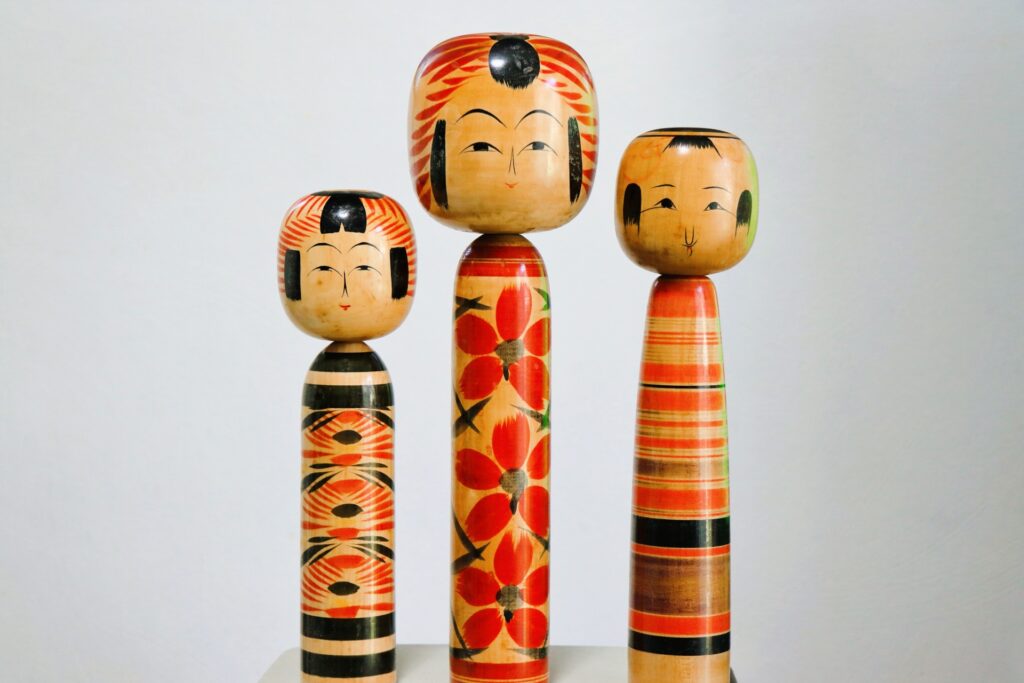
It is Kokeshi. That simple doll is one of the most famous souvenirs, popularized during the Edo period (1603-1868).
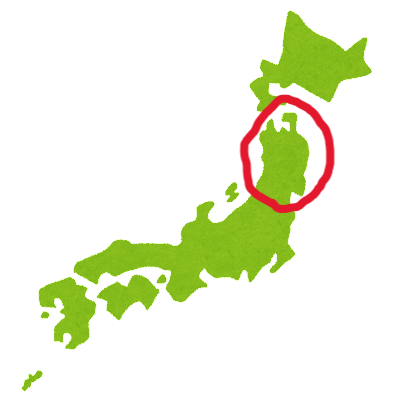
They are born in the Tohoku area; if it specifically says, it was from around the Spa sanatorium.
The craftsman of Kokeshi did not intend to make them as souvenirs or ornaments. They were for kids.
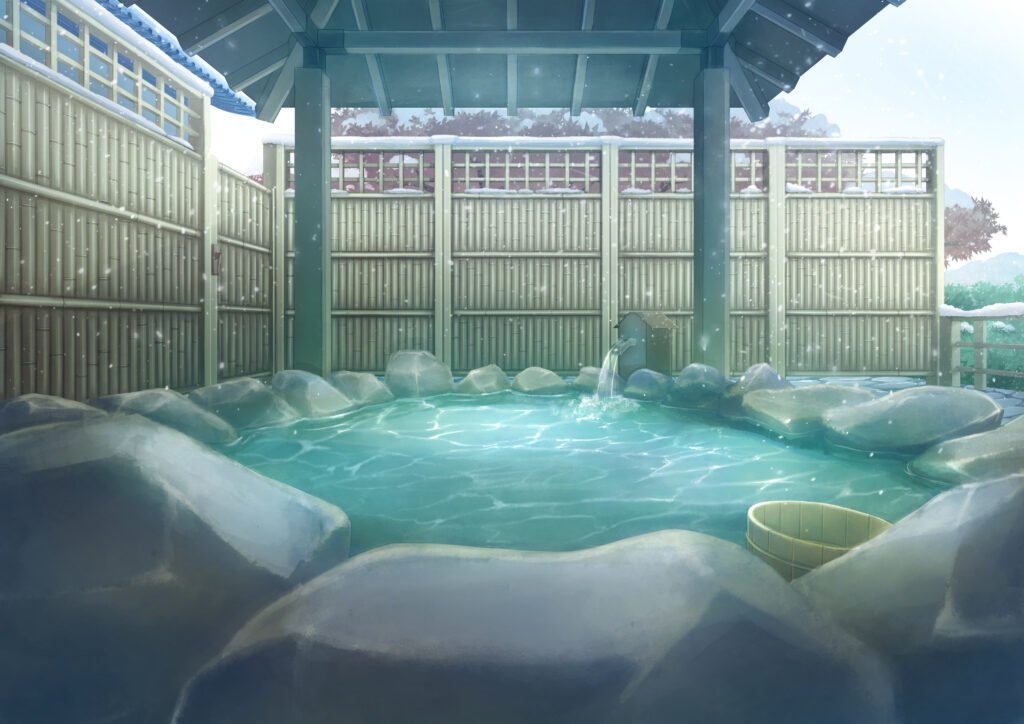
Indeed. They were educational toys. Some kids engaged in pretend play with it, while others used it as a comforting companion for napping. (Although they were not fluffy.)
OK then, how many kinds of Kokeshi in Japan?
Honestly, we are NEVER able to count the correct number out. At least, we should be able to categorize those kokeshis into eleven types. But it is not, of course, over yet. From those typical types, there are countless types born like branches of a big tree.
Let us add one more fact. The Kokeshis were hand-made products (in old times). That means EACH ONE has its unique facial expression. Do you remember? They are from Craftmates.
*Except for the products from factories.
It sounds like an order-made Teddy Bear.
What is the ingredient and the method to create it?
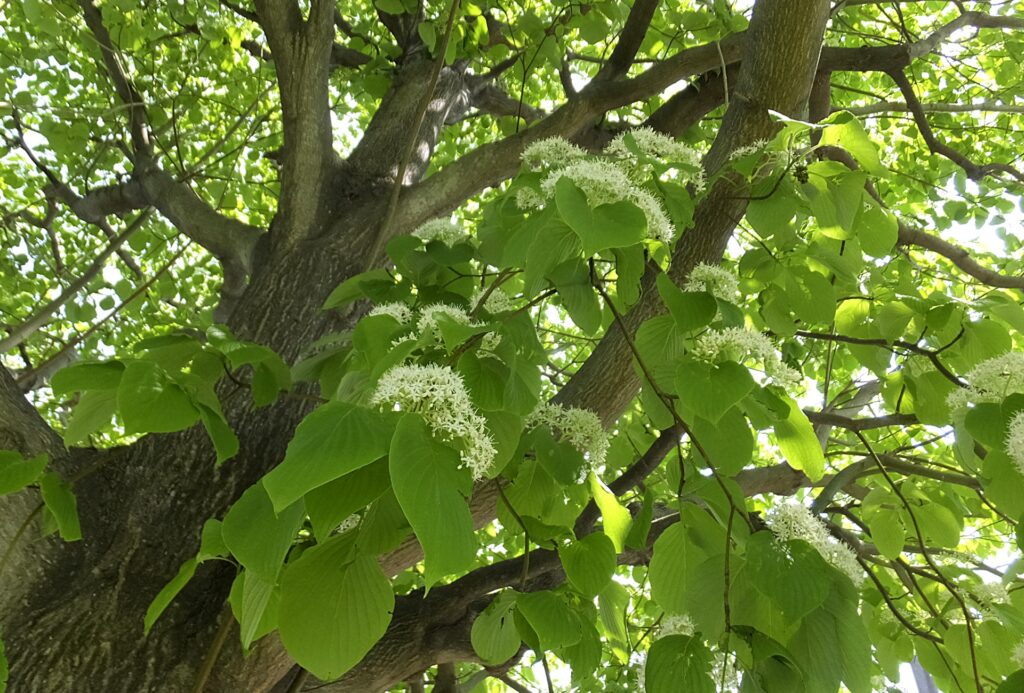
The craftsman of Kokeshi typically uses wood that is white in color and has a smooth texture for its creation. Therefore, they mainly use Mizuki.
Those trees are deciduous kinds in a wide area of Asian countries. In Japan, we used to worship with the trees for protection from fires and disasters.
Let us translate that name. Mizu means water. Ki means wood, because Mizuki can keep a lot of water inside. It is an interesting choice.
The process to create the dolls is also stunning. After felling those woods, the workers would not chisel them quickly. They must wait for YEARS (it usually takes a year, sometimes half a year).
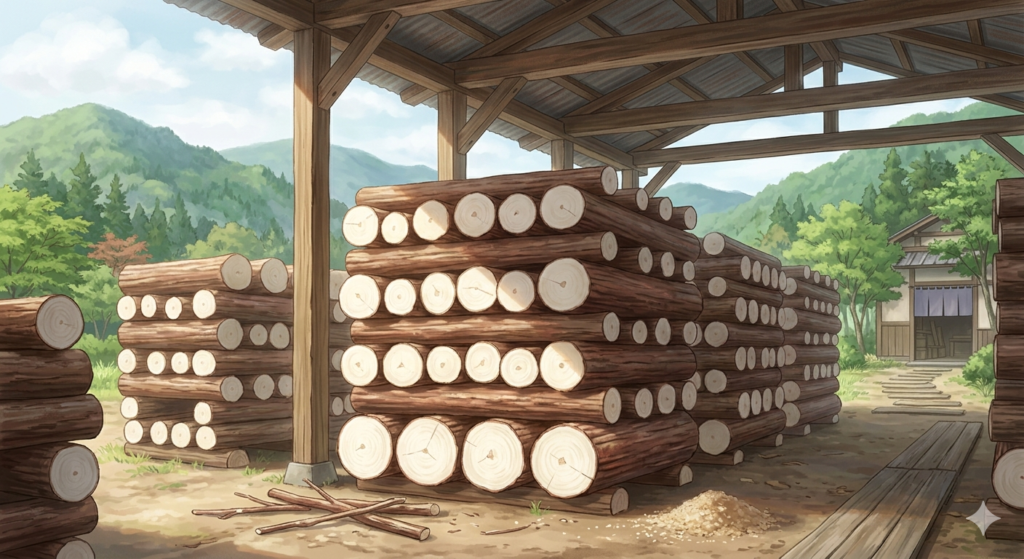
Indeed. Those trees need the DRY season to be capable of chiseling. After such an aging period, they (craftsmen) finally get the opportunity to do their creation.
The method to chisel those wooden dolls is also unique. Please remember. You saw the form of the Kokeshi in the picture. Yep. Their form is equal.
The workers of the Kokeshi use a rolling device to secure the wood and shape it. Thus, they utilize a wheel device for this process. Yes. It is Rokuro.
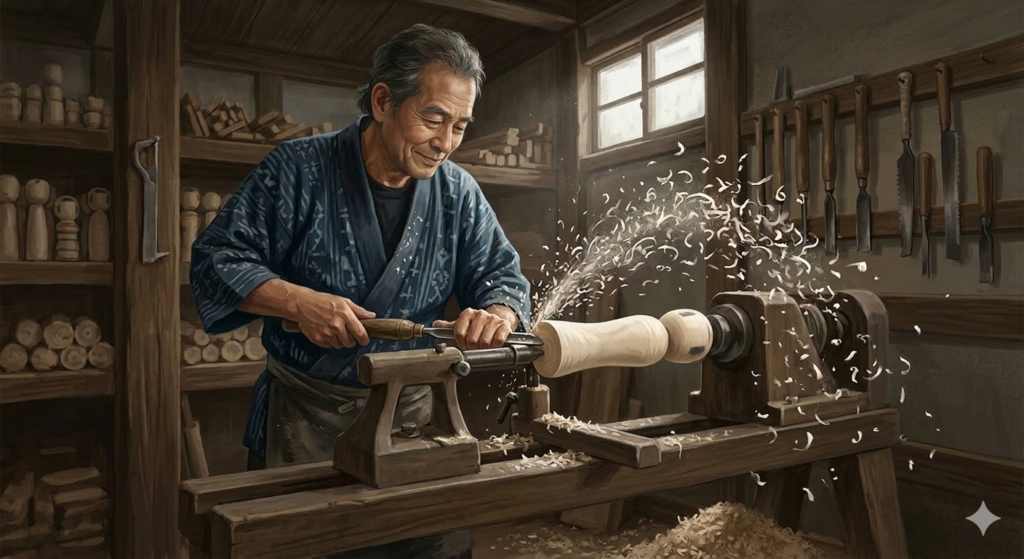
It is also where the insane chisel skill comes in. Please come to think about it. Before falling, those trees were very alive. That means each wood should have a more unique approach to shape than rock or stone statues.
Yes. They have different levels of sickness, hardness, and flexibility. If they disregard the unique properties of wood and start chiseling quickly, it will result in damage and cracking.
Indeed. Creating Kokeshi is really a technical skill. Particularly, the craftsman for the eleven traditional types of Kokeshi.
They should have/keep a strong concentration that seems like “Zen meditation (seated meditation)” because they need to hold the chisel firmly and tightly for sharpening, and also, colouring.
In the next section, we introduce the three types of popular and famous Kokeshi. Indeed. They are the best three of the eleven.
How do we recognize any differences between each type of them?
There are several unique methods of creating wooden dolls. For instance, they should be connecting the head and body, the size of the body, and the kinds of flowers drawn on it.
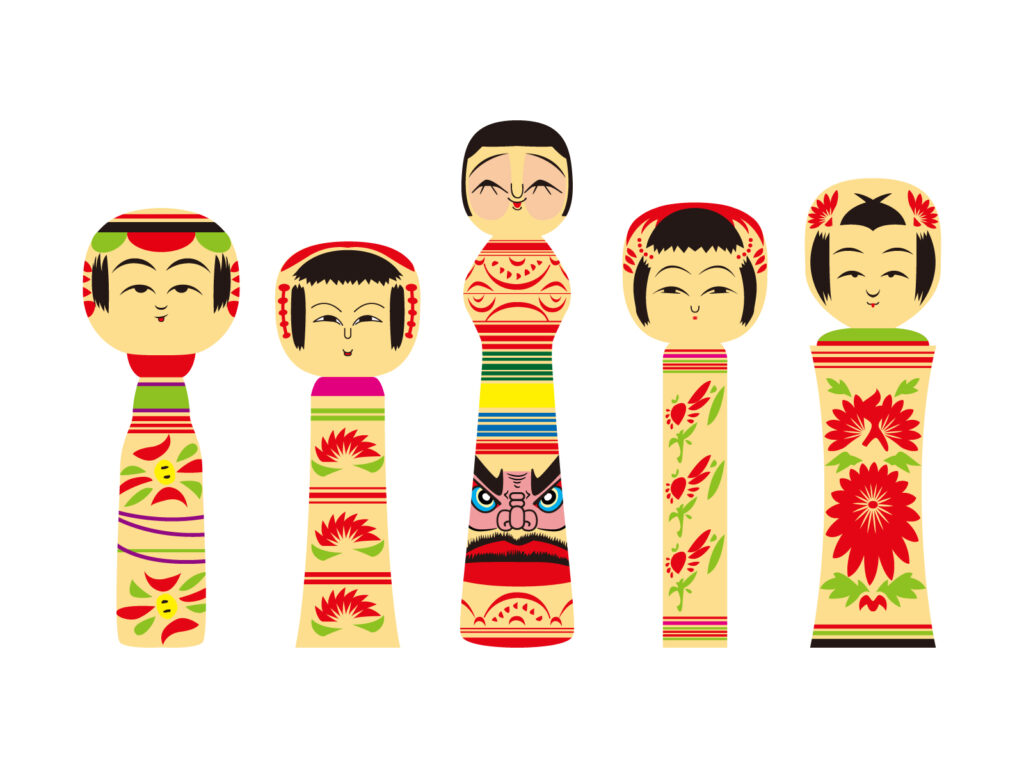
Take a closer look at the details of the three best Kokeshi dolls.
Three types of Kokeshi dolls
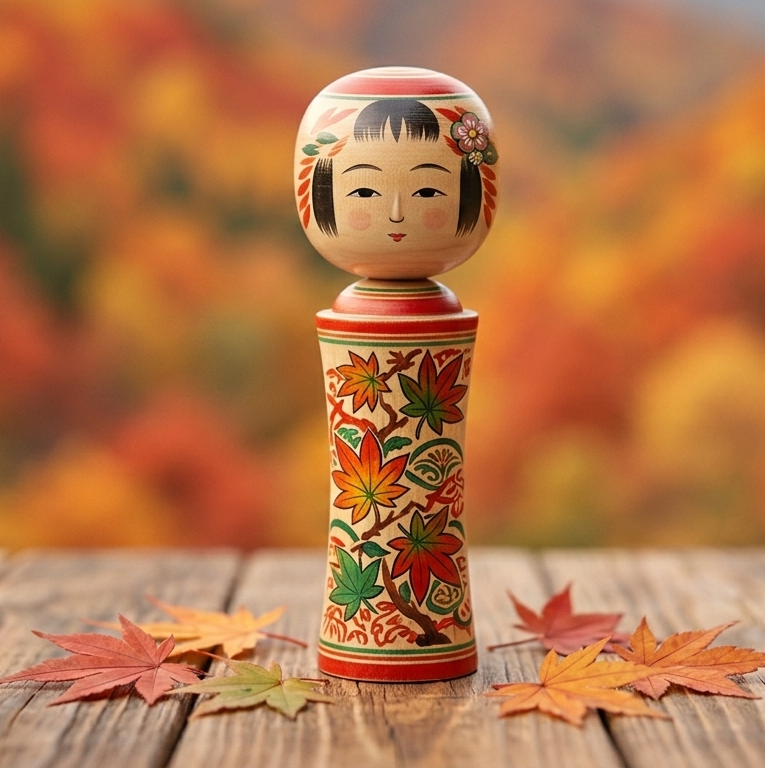
1 Naruko (Miyagi prefecture)
It is a kind of unique Kokeshi due to the part of the connection between its head and body. When you squeeze and screw the head, it sounds like a bird singing/chirping.
The name is from the feature. We can translate those words. Naru means sound (as a verb), while Ko means a child. The flowers painted on the body are chrysanthemum, maple, or peony.
2 Tsuchiyu (Fukushima prefecture)
The feature is the colouring. The head features a unique pattern in black that resembles a donut. We call it Janome. Surprisingly, it means the eyes of SNAKE.
Ancient Japanese people commonly used those large circles as scarecrows. They believed that the pattern could scare the birds, because they would misunderstand it as an enemy glaring.
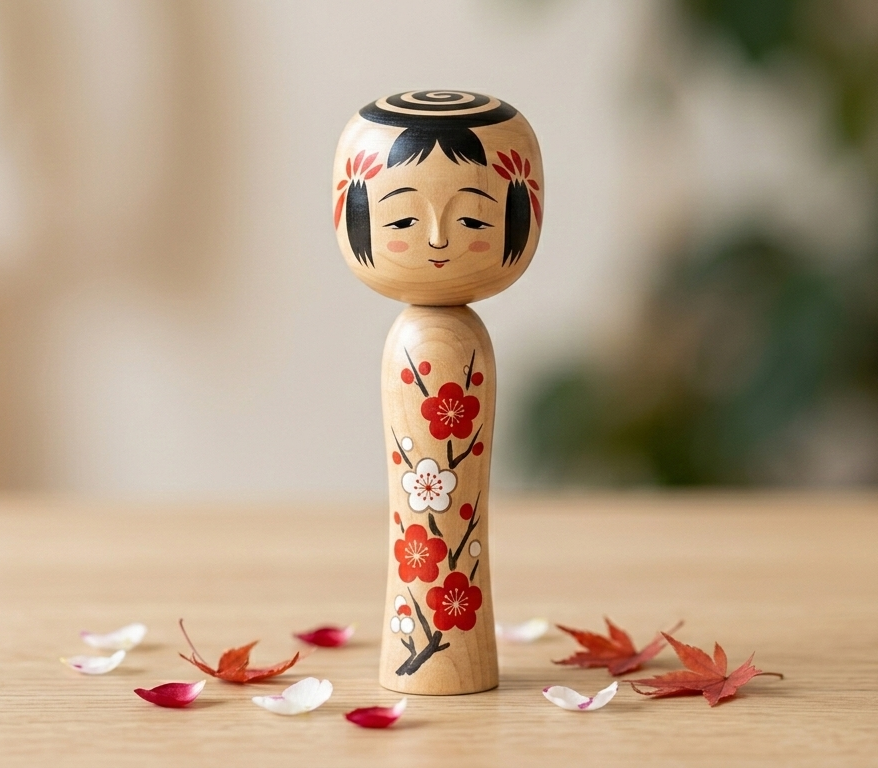
The Kokeshi doll has that round pattern, Janome, on its head that resembles a hairstyle. Indeed, the eye pattern contributes to its adorability this time.
Its eyes are also unique. We call them Whale eyes, because their eyes are droopy. They thought the eyes were similar to those of the whales. It is the reason.
The body is a bit thinner than the other types. And painted flowers are peony, chrysanthemum, or sometimes plum.
3 Togatta (Miyagi prefecture)
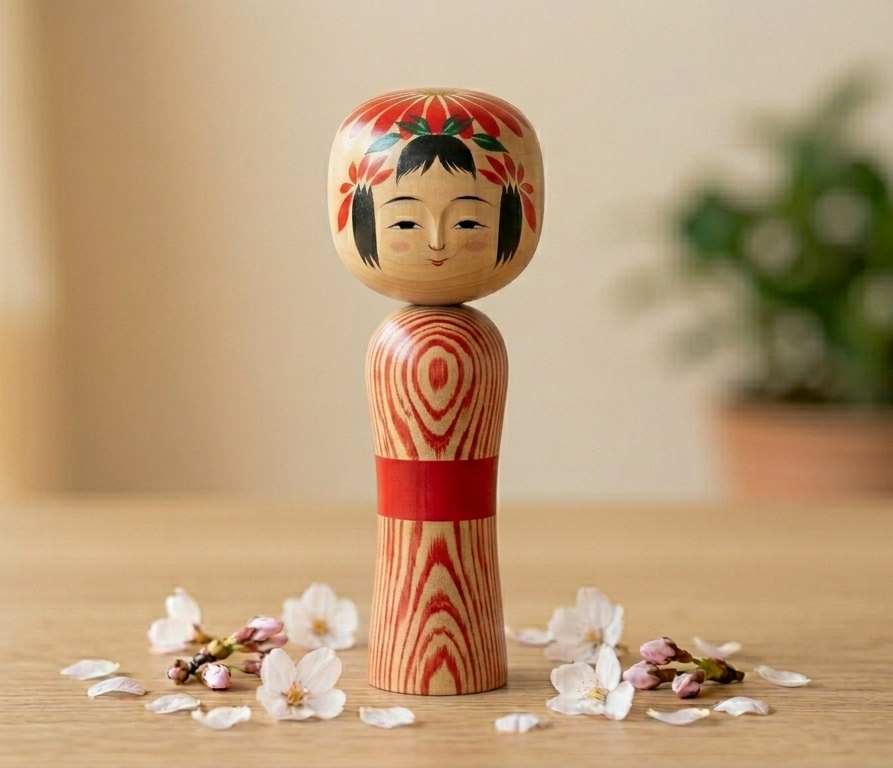
It is a type of the most popular Kokeshi. The workers paint the head with a beautiful red circle pattern, which looks like a hair ornament. The body is also thin and has sloping shoulders.
The body has flowers. They are chrysanthemum, plum, or cherry. Interestingly, they sometimes draw and colour the grain pattern.
what is more?
Today, we discussed the characteristics of kokeshi dolls. Thank you for reading this topic! But please remember. It is just a tip. If you visit the countryside of Japan, you will notice various dolls in every prefecture. Indeed. They are really famous souvenirs, which are countless.
Then, our blog will help you discover countless features in Japan! So, our blog has more articles about it. We now have four categories: Lifestyle in Japan, food, the Edo era, and religions. Detailed topics emerge from each main article like branches.
If you are still interested in Japanese uniqueness, please check and click them!
OK! Time to go! See you for the next feature of Japan!!