Hello! Welcome to the blog, How Unique Japan! How is it going, everyone?
First, we would like to ask you this question. Did you know that stationery items in Japan, such as mechanical pencils, pens, and erasers, come in many variations? We can find a long eraser, and sometimes we can also get an erasable pen.
Indeed. There are useful ideas in the stationery industry. Such clever ideas also live in daily products, such as rubber bands.
Yes. This topic is about that. The Rubber Bands!
Who made them, and how were they born?
Please do not underestimate that product. The Japanese brand has stronger, more elastic materials than those of other countries. It really makes those bands uncuttable (in an accident). So, they are really useful for binding.
Surprisingly, (almost) all products are from the same brand/company, which has existed since the Taisho era (1912-1926). It is 共和社 (Kyowa Company).
They call their rubber bands the O-band. The quality of that company is really good.
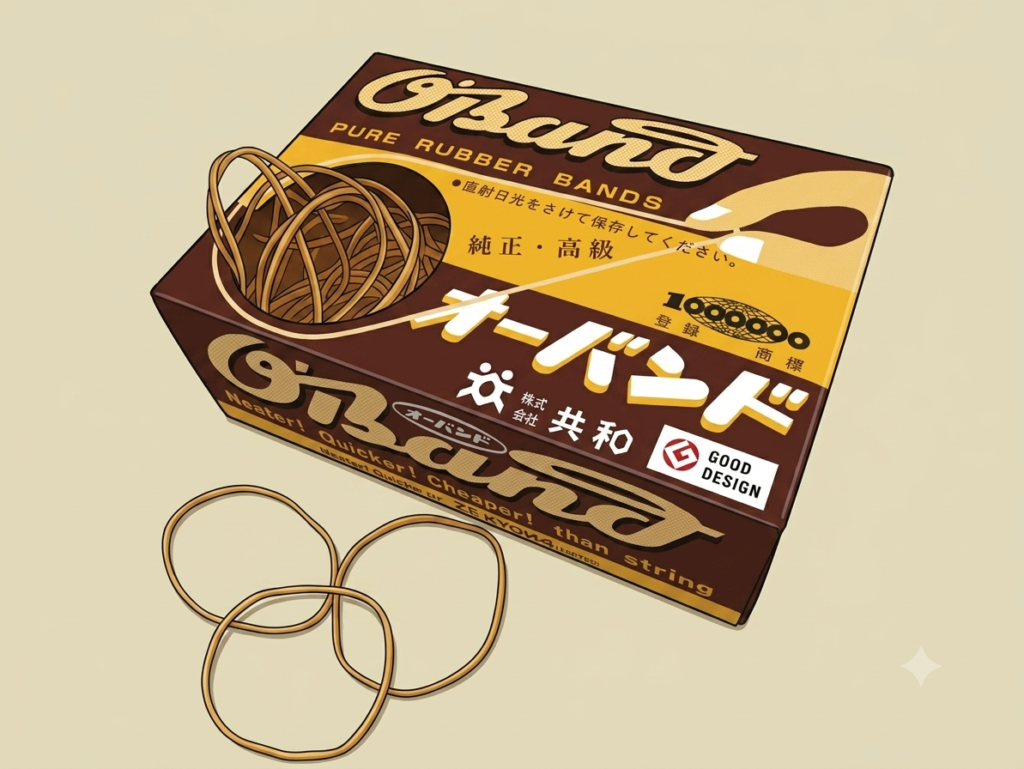
And they also have multiple sizes for some purposes. One of them has a circumference that is oddly the same length as a drum can. (How do we use such a gigantic-sized band? )
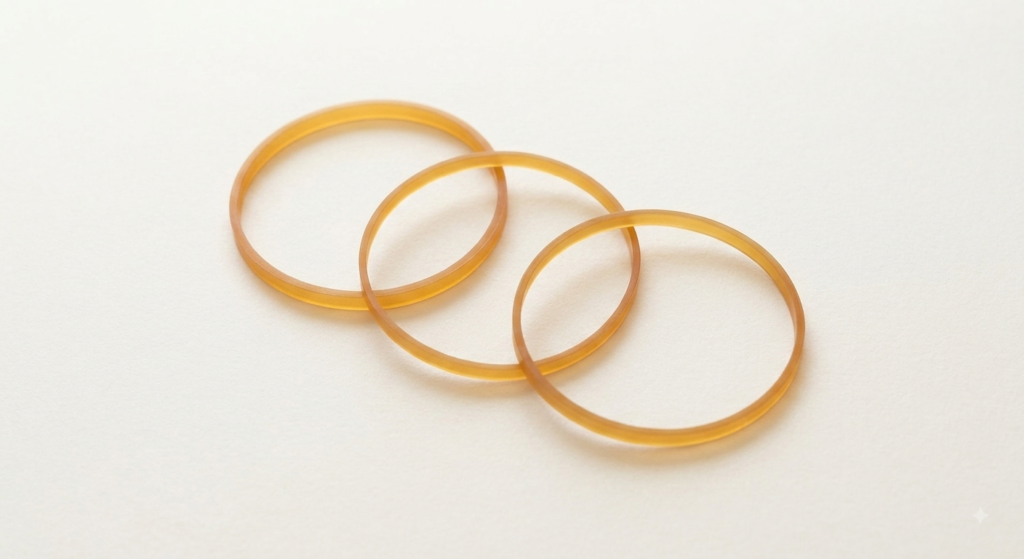
It is funny. Let us dive into more details of the O-band.
The products began with just one customer suggestion. She asked an engineer. Could you make a stronger and more elastic band?
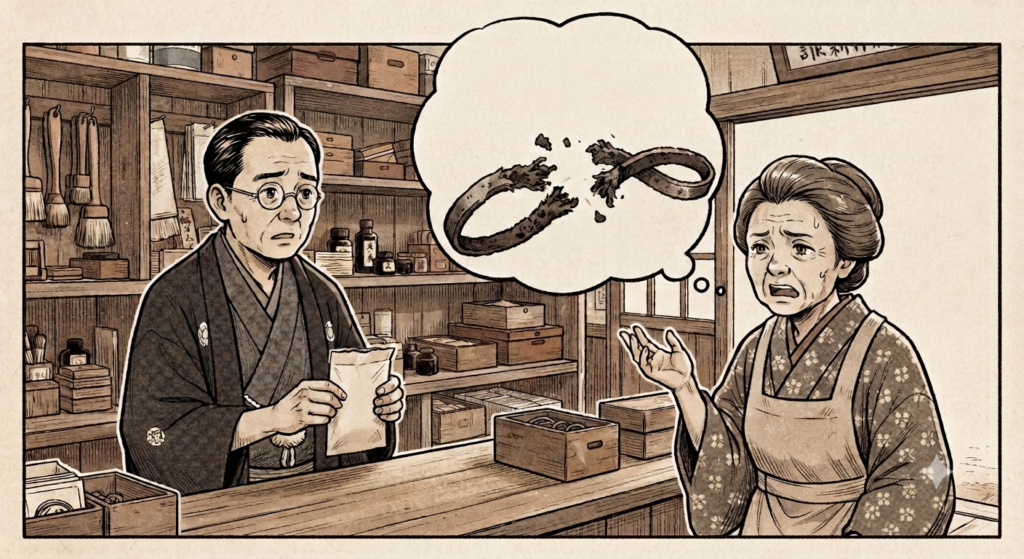
Indeed. During the Taisho era, bands were made from processed rubber bicycle tubes. It looked darker than the current one. And of course, it was weak and easily breakable.
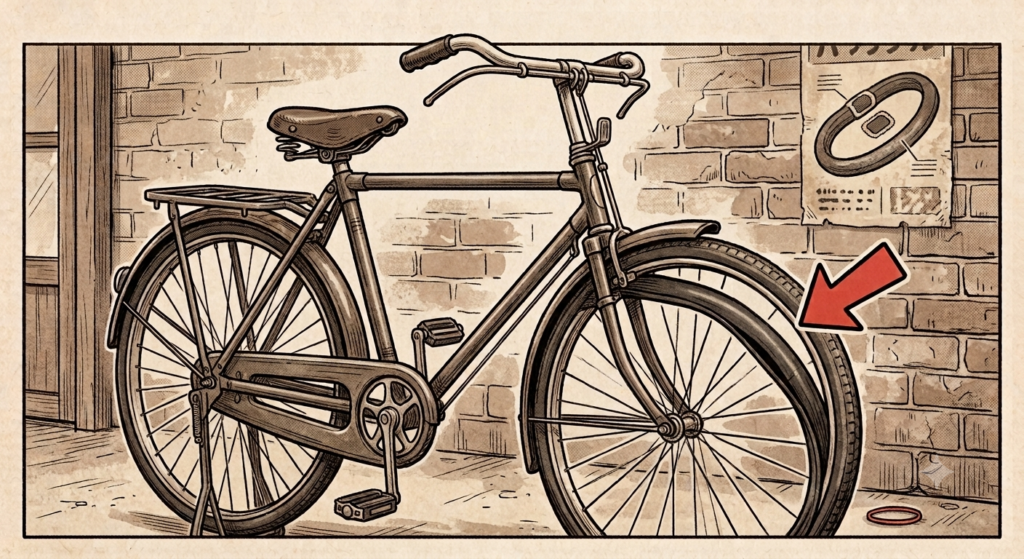
The engineer who founded Kyowa successfully created a product still used today. It was when the brand was born (in 1917).
The founder was a considerate individual. He also cared deeply about his customers. So, he also cared about the smell of rubber. (As you might know, pure rubber is smelly.)
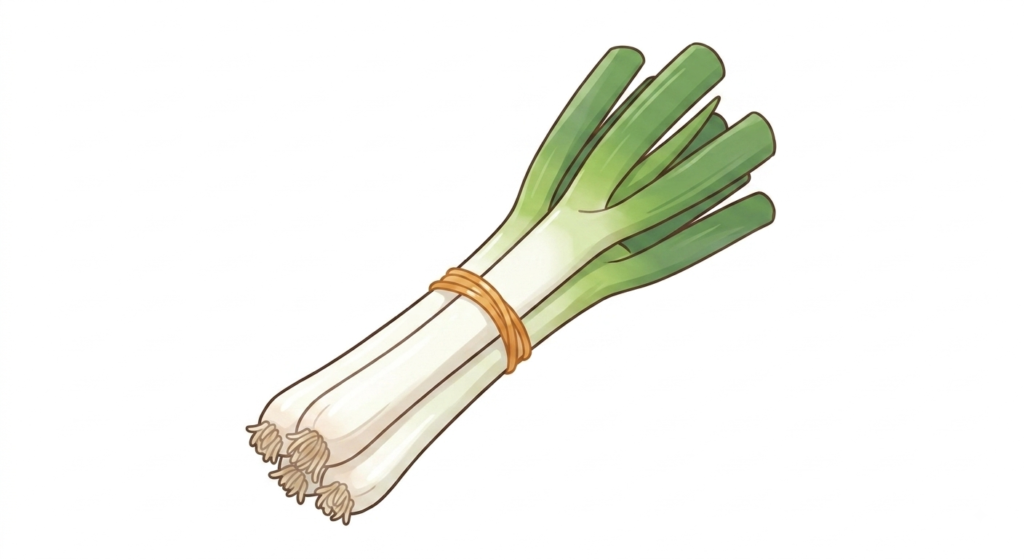
Yep, the rubber bands have no unpleasant scent. Thus, we can bind any elongated vegetables (for instance, vegetables) without anxiety.
The slogan is still ” Close to you always from 100 years ago. We can admit that it is true.
Let us add one more. The package design has not changed since the product was launched.
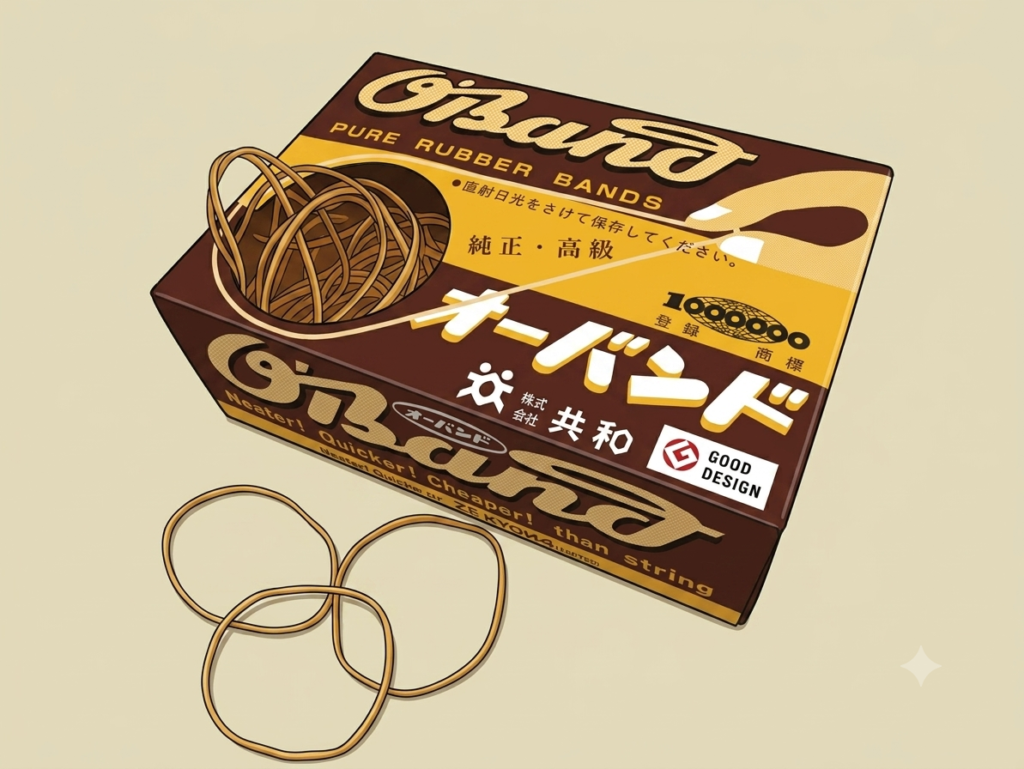
Why was it colored like caramel? It indicates the purity of the rubber. The rubber bands contain no impurities, additives, or coloring agents.
OK. A little boring section is over. We shall finally see the bands in different variations with features.
Top 3 of the O-bands
3 Colorful bands in the can package
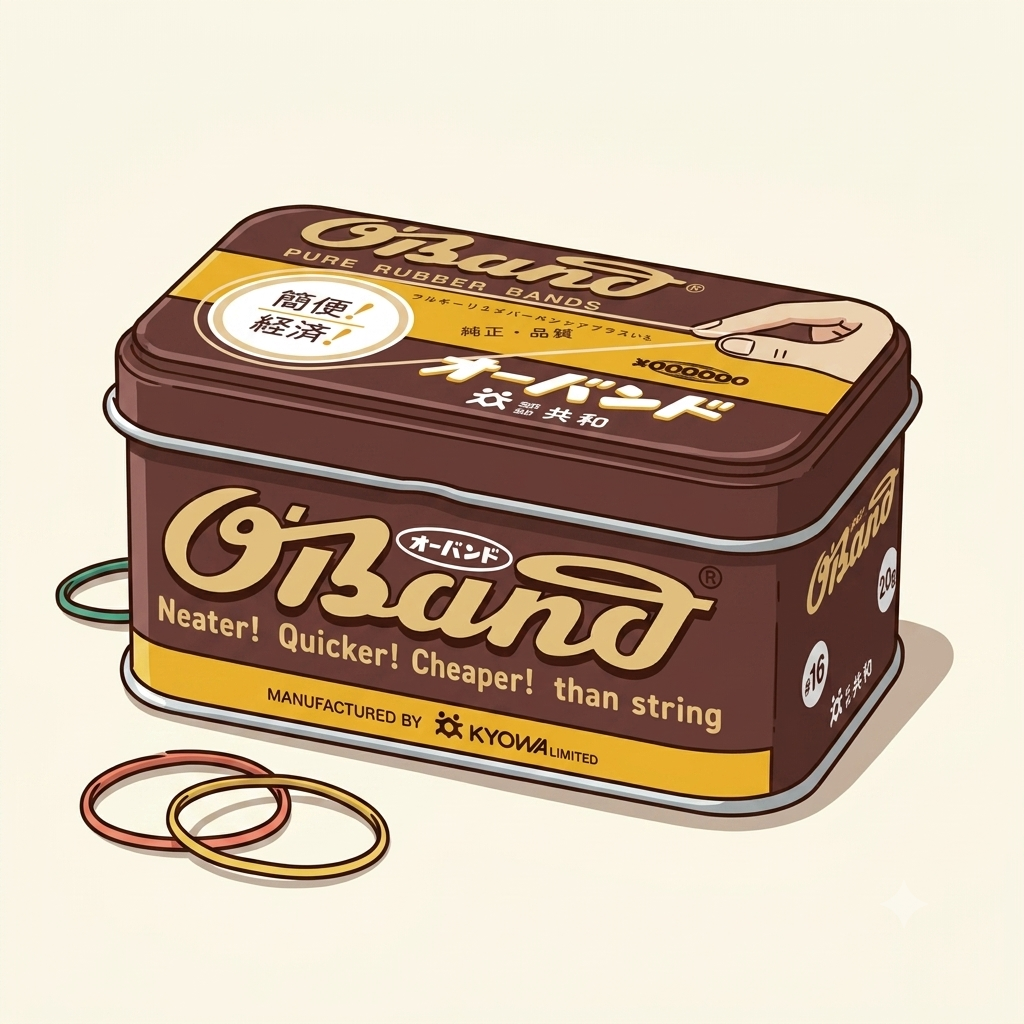
The company employs a retro design for its packaging. Basically, the rubber bands are in a paper box, but this box is made of steel. The bands have multiple colors. It looks a bit special.
Once we have used them, we can repurpose the box as a retro accessory case.
2 Tabane (binding) bands
This band oddly has small protrusions like an arrow or a tail. It can make the object’s band tighter and easier to take off. How does it work?
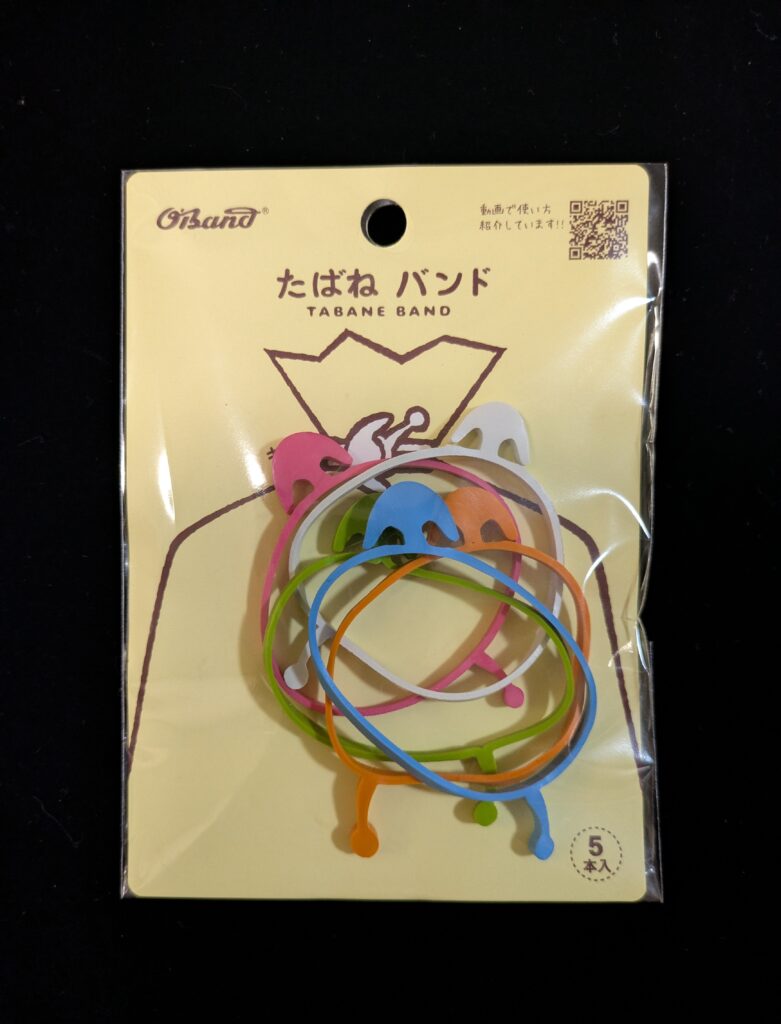
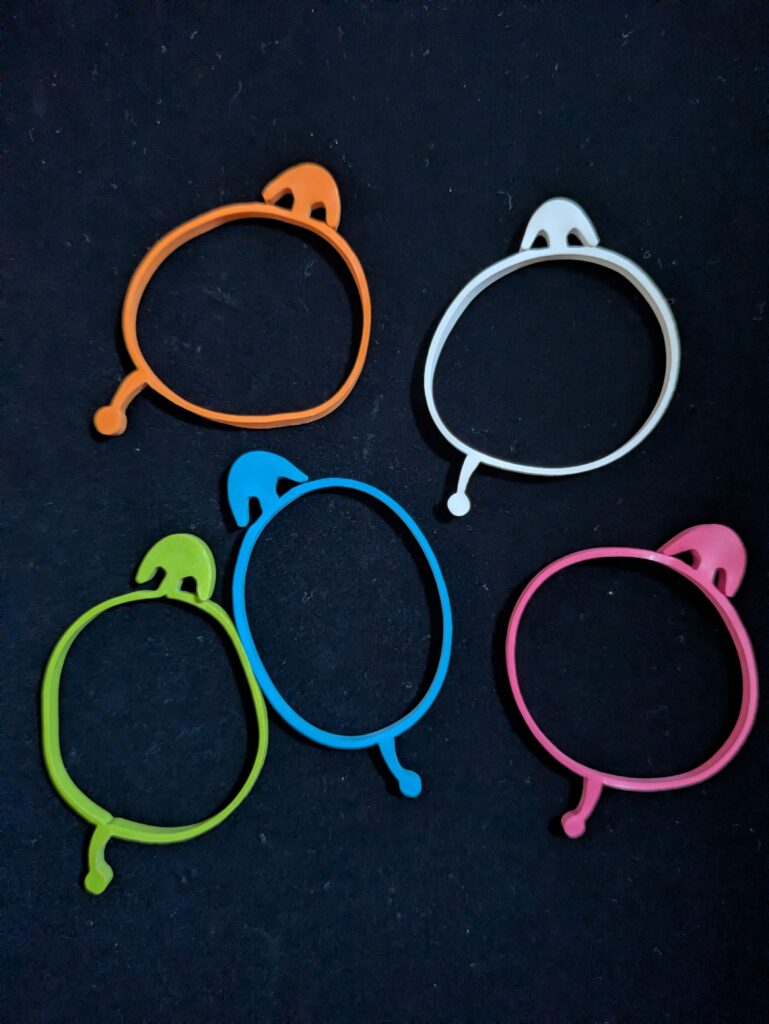
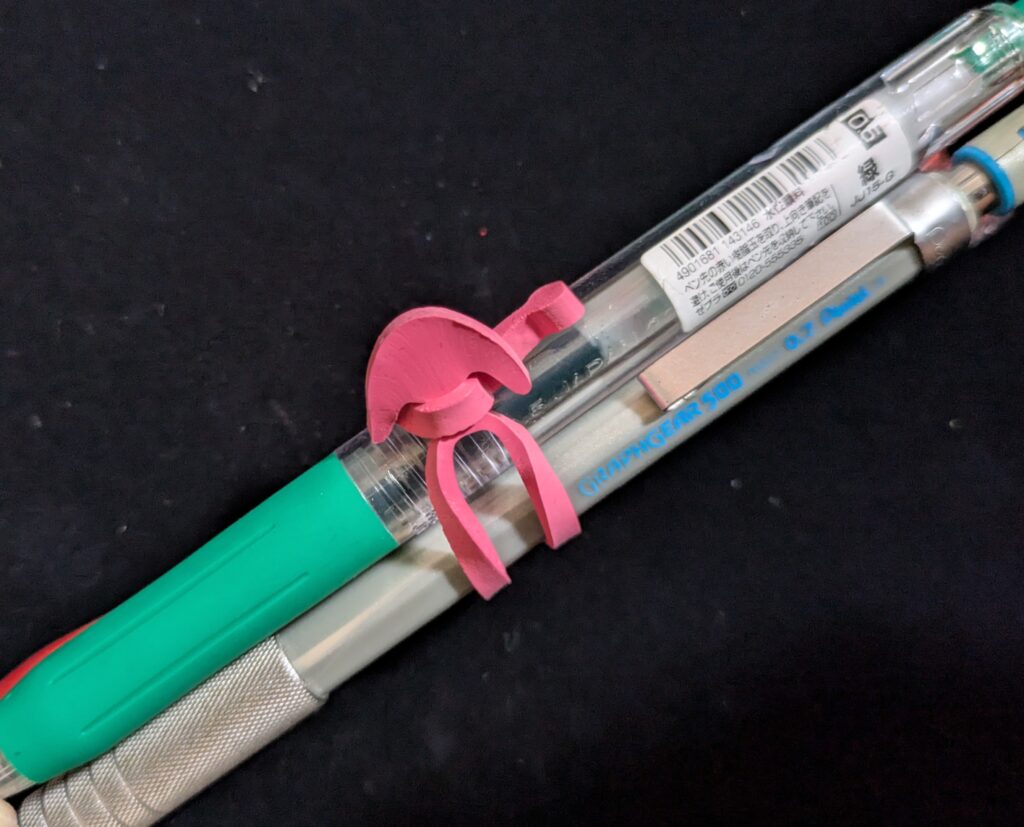
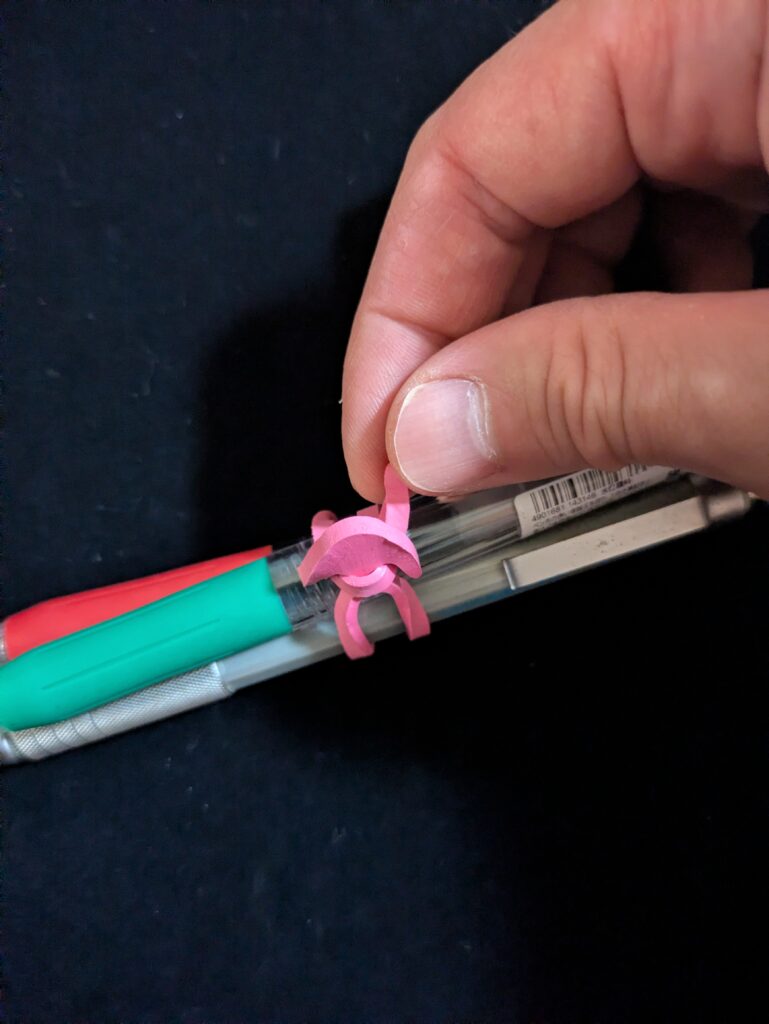
The identity of the protrusions is a stopper. When we band something with it, we can hook the arrow through its hole. If we want to take it off, we only need to pick another protrusion, making a small gap for the arrow. So, it naturally comes undone by its elasticity.
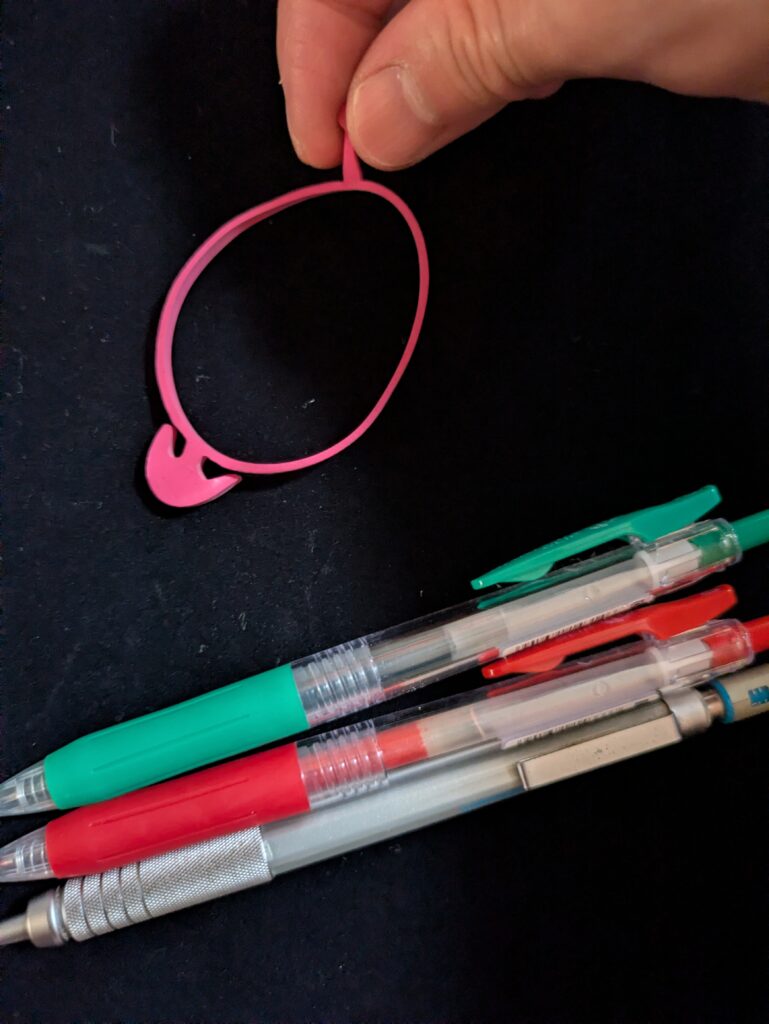
The thoughtfulness of that company does not stop there. The next one is full of ideas and cute.
1 Qtto (kyutto) band
Qutto (kyutto) is an onomatopoeia for tying something in Japan.
It is the revolutionary one from the Tabane band. As you can see, the protrusions truly became tails and faces of animals. Indeed. It is cute.
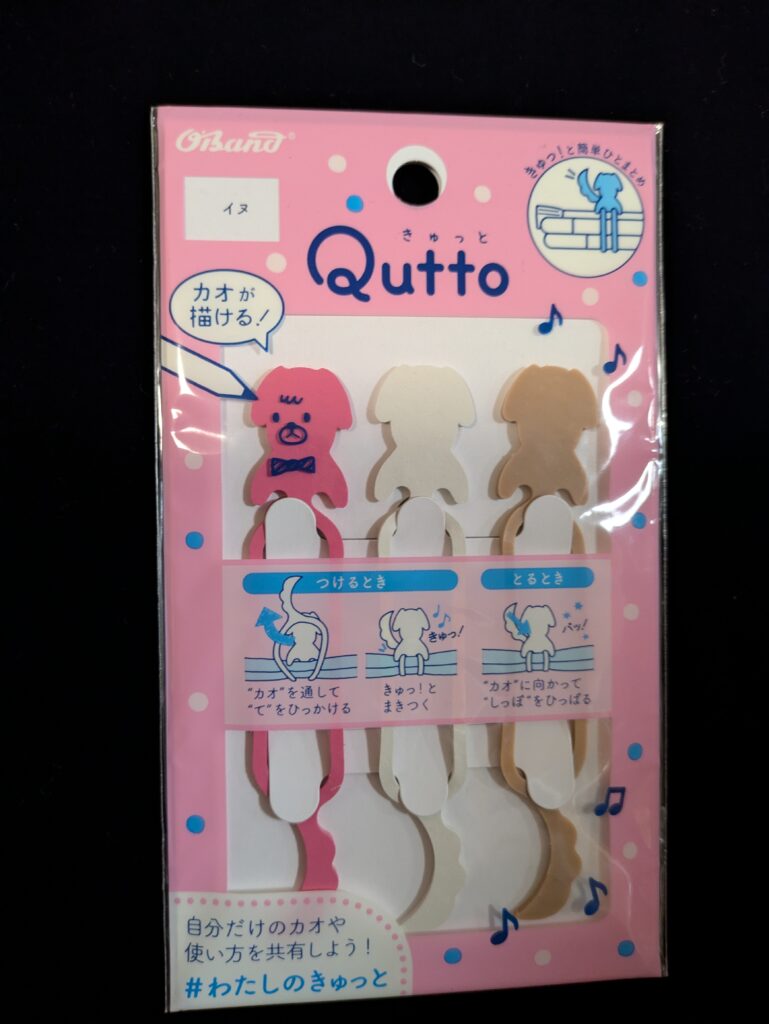
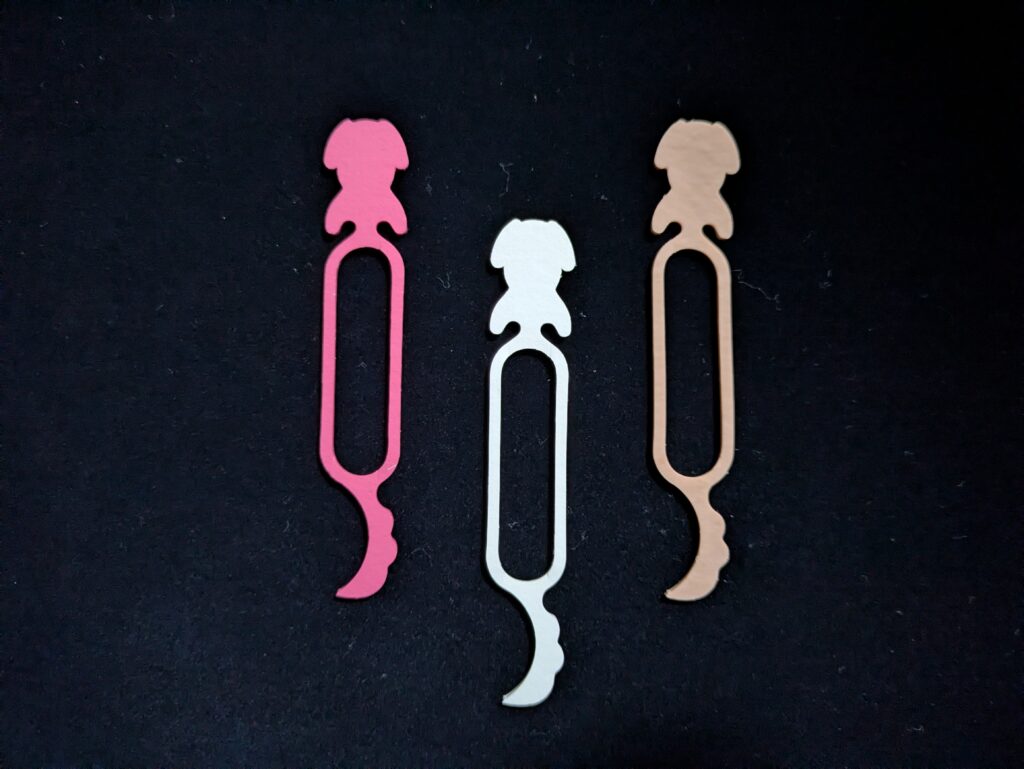
However, do you notice that some faces lack eyes or a mouth?
It is not from a printing error. We CAN WRITE ORIGINAL FACES AND APPEARANCES.
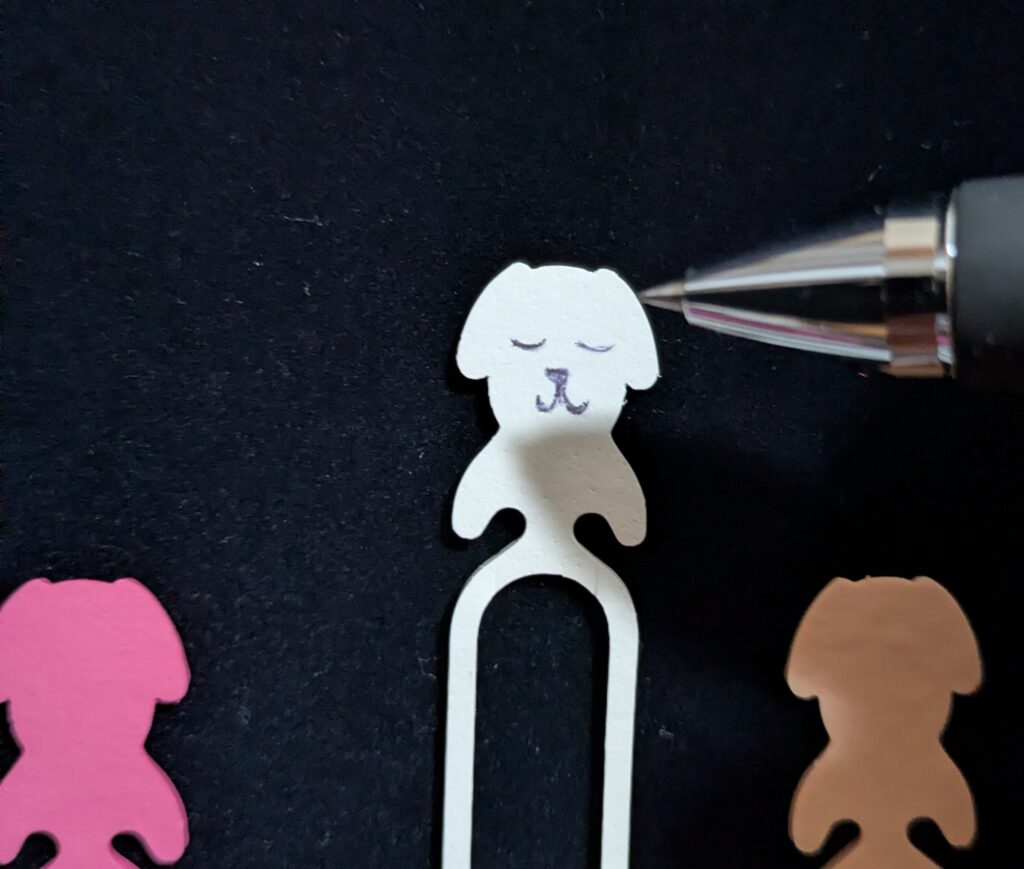
The Qtto band looks like an interior for a desk. We are sure that would never bother your deskwork.
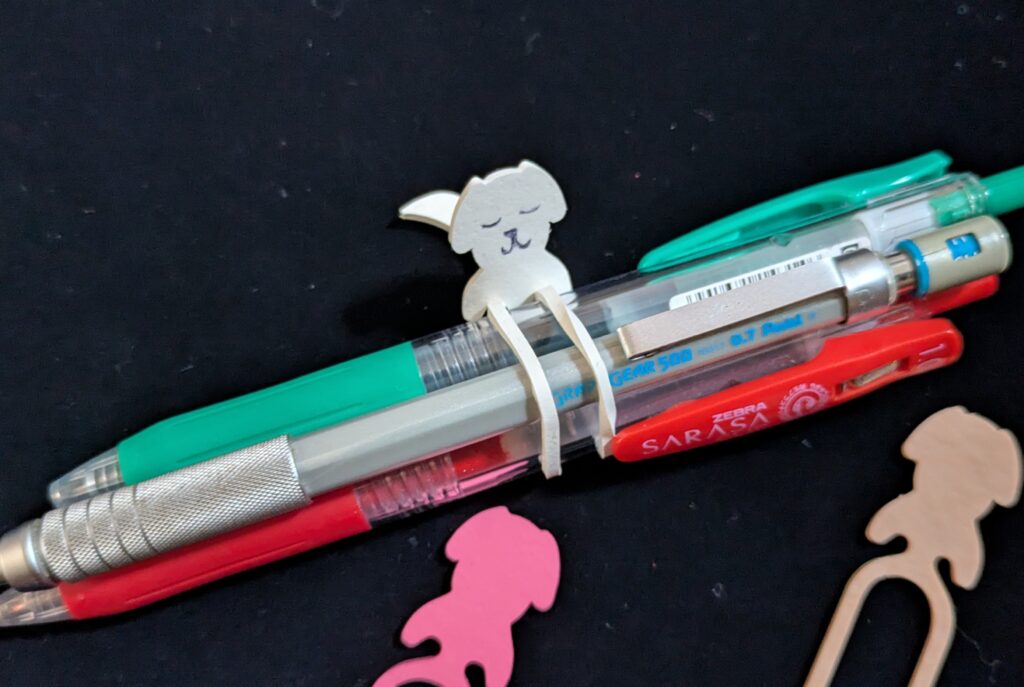
The other ingenuity is the material. Nowadays, the O-band has switched to silicone material. Its durability has improved due to its increased toughness against UV exposure.
What is more?
So, this was a briefing on the Japanese products. But, as you might see, it must be a tiny tip of a giant iceberg! So, there are still many unique things in Japan we have not introduced yet!
If you are still curious about such Japanese daily life, please try the other topics on this blog.
Now, we have four topics about Japanese uniqueness. They are about Japanese lifestyle, food, religions, and the Edo era. No hesitation in exploring them! Just TRY IT!
OK! It is time to go! Thank you for reading this article, and see you next time for something unique in Japan!!